
 Español
 Portugues
 Pусский
 Français
 العربية
 ไทย
ไทย Türk dili
 Indonesia
 Tiếng Việt


Flexible Twisted Wire
Flexible twisted wire is a versatile conductor widely used in electrical, electronic, and mechanical applications that require both durability and freedom of movement. It is made by twisting multiple fine strands of metal wire together, often copper or tinned copper, to form a single, more flexible conductor. This construction provides a combination of strength, conductivity, and bendability that solid wire cannot easily match.The main advantage of flexible twisted wire is its ability to withstand repeated bending, vibration, and movement without breaking. Each individual strand is thin and pliable, so when they are twisted together, the overall cable can flex in multiple directions while distributing mechanical stress across many strands. This makes it ideal for dynamic environments such as robotics, machinery, automotive systems, and portable electronic devices.Flexible twisted wire is available in a wide range of gauges, strand counts, and insulation types. Common insulation materials include PVC, silicone, rubber, and cross-linked polymers, chosen according to temperature range, chemical resistance, abrasion resistance, and required voltage rating. For applications in harsh or outdoor environments, additional jacketing or shielding can be applied to protect against moisture, oils, UV radiation, and electromagnetic interference.The electrical performance of flexible twisted wire is generally excellent due to the high conductivity of the base metal and the increased surface area provided by multiple strands. In some cases, fine-stranded conductors can offer lower resistance over a given length compared with a single solid conductor of the same nominal size. The twisted construction also helps maintain uniform current distribution and reduces the risk of localized heating under load.In signal and data applications, twisting can help reduce electromagnetic noise and crosstalk. By carefully controlling the twist pitch, interference can be minimized, which is especially important in low-voltage control circuits and communication lines. When combined with shielding, such as braided copper or aluminum foil, twisted wire can deliver stable performance even in electrically noisy industrial environments.Installation and handling are also simplified with flexible twisted wire. It can be routed through tight spaces, around corners, and inside moving assemblies without excessive force. This reduces installation time and lowers the risk of damage during wiring. Its flexibility is particularly beneficial in control panels, cable chains, and articulated joints, where rigid cables would quickly fatigue or fail.In summary, flexible twisted wire is an essential component in modern electrical and electronic systems. Its fine-stranded, twisted structure offers excellent flexibility, mechanical durability, and reliable electrical performance. By selecting the appropriate conductor material, strand configuration, insulation, and protection, it can be tailored to meet the specific requirements of applications ranging from consumer electronics to heavy industrial machinery.
Products
Category:
-
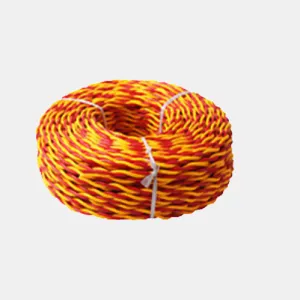
CU/PVC/PVC RVS Flexible Twisted Wire
Category: Building wireBrowse number: 290Number:Release time: 2025-02-19 02:48:23High-quality CU/PVC/PVC RVS flexible twisted wire with stranded copper conductors and PVC insulation and sheath. Perfect for flexible wiring in residential, industrial, and control panel applications. Rated for 300/500V with excellent flexibility and safety.
News
Category:
No search results found!
Case
Category:
No search results found!
Video
Category:
No search results found!
Download
Category:
No search results found!
Job
Category:
No search results found!
Featured Products
No search results found!



 Phone
Phone E-mail