
 Español
 Portugues
 Pусский
 Français
 العربية
 ไทย
ไทย Türk dili
 Indonesia
 Tiếng Việt


Building wires
Building wires are a critical component in modern construction, serving as the essential pathways for electrical power and communication signals within residential, commercial, and industrial structures. They ensure the safe and efficient distribution of electricity from the main power supply to various outlets, switches, lighting fixtures, and appliances throughout a building. The design, selection, and installation of building wires are guided by stringent safety standards and regulations, which are necessary to prevent hazards such as electric shocks, fires, and equipment failures.The core of most building wires is made from copper or aluminum due to their excellent electrical conductivity. Copper remains the preferred material for most applications because of its superior conductivity and flexibility, although aluminum is sometimes used in larger cables for cost efficiency and weight reduction. To enhance safety and performance, these metallic cores are insulated with various materials such as polyvinyl chloride (PVC), cross-linked polyethylene (XLPE), or other thermoplastic or thermosetting compounds. The insulation not only prevents accidental contact with live wires but also offers protection against environmental factors like moisture, heat, and chemicals.Building wires are manufactured in different sizes and types, which are classified by factors such as the wire gauge (thickness), the number of conductors, insulation type, and suitable voltage levels. Common types used within buildings include single-core and multi-core wires, each serving different purposes ranging from simple lighting circuits to complex power distribution networks. The correct selection of wire size and type is vital to minimize energy loss, avoid overheating, and ensure the longevity of the entire electrical system.Installation of building wires must comply with national and local electrical codes, which dictate routing, support, connection methods, and protective measures. Proper installation techniques, such as securing wires away from sources of mechanical damage and avoiding sharp bends, reduce risks of wire degradation and failure. Additionally, modern construction often integrates smart wiring systems, combining electrical power with data and communication cables to enable automation and advanced connectivity within buildings.In summary, building wires are more than just conductors of electricity—they are a backbone for the functionality, safety, and efficiency of built environments. Their design and implementation directly impact the overall performance and reliability of electrical installations, making them an indispensable element in any construction project.
Products
Category:
Building wire
-
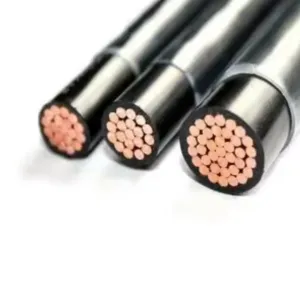
Ttu Cable 250 300 400 500 600 700 800 1000 Mcm Single Core XLPE Insulated 250mm2 Power Cable Building Wire 600V
Category: Low voltage cableBrowse number: 282Number:Release time: 2025-07-23 09:54:03This product is a TTU cable, including specifications such as 250, 300, 400, 500, 600, 700, 800, 1000 thousand circular mils (Mcm) and 250mm². It is of a single-core design, uses cross-linked polyethylene (XLPE) for insulation, belongs to building wire, and is applicable to a voltage of 600V. -
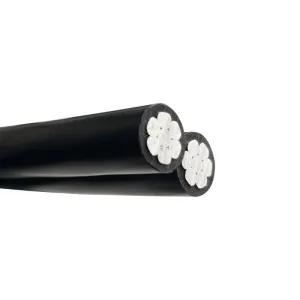
AWG 4/0 Xhhw Wire Aluminum Xhhw-2 Fr Sr Cable Xlp Insulation Building Wire 600V
Category: Overhead insulated line wiresBrowse number: 380Number:Release time: 2025-07-30 08:20:37AWG 4/0 Xhhw Wire Aluminum Xhhw-2 Fr Sr Cable Xlp Insulation Building Wire 600V The AWG 4/0 XHHW Aluminum Cable—including XHHW-2, FR (Flame Retardant), and SR (Sunlight Resistant) variants—represents a heavy-duty solution for 600V building wiring. Crafted from 1350-H19 aluminum (61% IACS conductivity), its 19-strand (2.1mm diameter) design delivers 230A continuous current at 90°C (XHHW-2) and 195A at 75°C (standard XHHW). XLPE insulation ensures exceptional durability: 1.8mm thickness with 22kV/mm dielectric strength, resisting chemicals, moisture, and abrasion. XHHW-2 handles -40°C to 90°C, while FR variants meet UL 94 V-0 flammability, and SR models feature 2.0% carbon black for UV resistance (10,000-hour sunlight endurance). Compliant with UL 44 and ASTM B230, this 4/0 AWG cable (3.8kg/m) suits heavy-load applications: main service entrances, large motor feeds, and commercial building distribution. Its flexibility (8× OD bend radius) facilitates conduit/tray installation, offering 40% cost savings over copper, making it ideal for industrial and high-rise construction. -
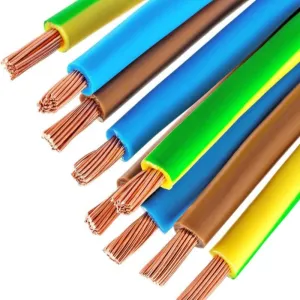
H05V-R H07V-R Cable 1.5mm 2.5/4/6/10/16/25mm Stranded Copper PVC Covered Housing Wire for Building
Category: Building wireBrowse number: 225Number:Release time: 2025-08-22 06:34:25H05V-R H07V-R Cable 1.5mm² 2.5/4/6/10/16/25mm² Stranded Copper PVC Covered Housing Wire for Building H05V-R and H07V-R cables stand as premium stranded copper housing wires, featuring robust PVC coverage, tailored for diverse building electrical needs. Available in 1.5mm², 2.5mm², 4mm², 6mm², 10mm², 16mm², and 25mm², they cater to residential, commercial, and institutional buildings with precision. The stranded copper core ensures exceptional flexibility and conductivity, simplifying installation in walls, ceilings, and conduits—critical for navigating complex building structures. PVC insulation and sheathing deliver superior resistance to moisture, abrasion, and flame, complying with EN 50525 standards for safety and longevity. H05V-R, rated 300/500V, excels in low-power circuits like lighting and small appliances, while H07V-R (450/750V) handles heavy loads such as HVAC systems and main distribution lines. From 1.5mm² for intricate wiring to 25mm² for high-capacity distribution, each size guarantees reliable performance. SEO-optimized keywords—“stranded copper housing wire,” “PVC covered,” and key voltages—make them easily discoverable for builders and electricians seeking code-compliant, durable building wiring solutions. -
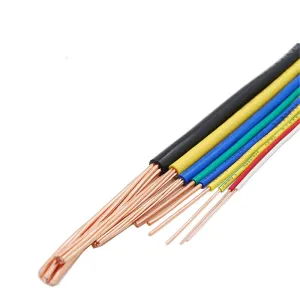
Flame Retardant Cable ZR-BV ZR-BVR 450 750V Electrical Wire Building
Category: Building wireBrowse number: 464Number:Release time: 2025-08-28 09:00:45Flame Retardant Cable ZR-BV ZR-BVR 450/750V Electrical Wire Building Summary The Flame Retardant Cable ZR-BV and ZR-BVR, rated for 450/750V, are high-quality electrical wires specifically engineered for building electrical systems, combining reliable flame-retardant performance, stable electrical conductivity, and strong adaptability to diverse installation scenarios. As core components in residential, commercial, and public building power distribution, these cables address the critical need for fire safety in enclosed electrical environments— a top priority for architects, electrical contractors, and facility managers. ZR-BV (single-core solid copper conductor flame-retardant PVC insulated wire) and ZR-BVR (single-core stranded copper conductor flame-retardant PVC insulated wire) differ primarily in conductor structure, catering to distinct installation requirements. The ZR-BV features a solid copper conductor, which offers excellent structural stability and is ideal for fixed installations with minimal bending, such as hidden wiring in wall cavities, ceiling conduits, or floor ducts. Its rigid structure ensures consistent performance over long-term use, with low risk of conductor breakage from vibration or minor external stress. The ZR-BVR, by contrast, uses a stranded copper conductor— composed of multiple fine copper strands twisted together— delivering superior flexibility. This makes it perfect for installations requiring frequent bending or routing through tight spaces, such as inside electrical switchboards, around furniture, or in renovation projects where wiring adjustments may be needed. Both cable types meet the "ZR" (flame-retardant) standard, meaning they can inhibit flame propagation and self-extinguish when the fire source is removed, in compliance with GB/T 19666 (Chinese standard for flame-retardant cables) and IEC 60332-1-2 (international standard for vertical flame propagation). This flame-retardant property is critical for building safety: in the event of an electrical fault (e.g., short circuit), the cables prevent the spread of fire, minimizing damage to the building structure and providing valuable time for evacuation. With a rated voltage of 450/750V, these cables are suitable for low-voltage power distribution systems in buildings, powering lighting fixtures, household appliances, office equipment, and small-scale mechanical devices. They also boast excellent electrical performance: the high-purity copper conductors (≥99.95% purity) ensure low DC resistance (e.g., ≤1.83Ω/km for 2.5mm² ZR-BV at 20°C), enabling efficient current transmission with minimal energy loss. The PVC insulation layer is resistant to aging, moisture, and moderate chemical exposure, ensuring a service life of over 20 years in typical building environments. Compliant with global safety and environmental standards (including RoHS 2.0 for restricted substances), the ZR-BV and ZR-BVR cables offer a cost-effective, safe, and versatile solution for building electrical systems. Their clear differentiation in flexibility and fixed vs. adjustable installation suitability makes them a go-to choice for meeting the diverse needs of modern building projects.
News
Category:
No search results found!
Case
Category:
No search results found!
Video
Category:
No search results found!
Download
Category:
No search results found!
Job
Category:
No search results found!
Featured Products
No search results found!



 Phone
Phone E-mail