
 Español
 Portugues
 Pусский
 Français
 العربية
 ไทย
ไทย Türk dili
 Indonesia
 Tiếng Việt


Aerial Bundled Conductor Cable
Find {keyword} Wholesale & quotes from China. We are Professional Manufacturer of {keyword} company, Factory & Exporters specialize in {keyword} with High-Quality.
Products
Category:
-
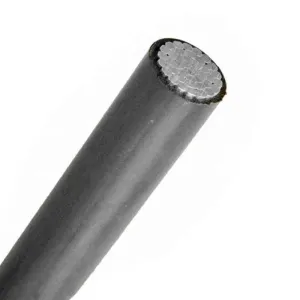
11kv 70mm2 Al/Sc/XLPE/Sc/Cut/PVC 3+1 Aerial Bundeled Conductor Cable
Category: Overhead insulated line wiresBrowse number: 269Number:Release time: 2025-08-06 03:31:1911kv 70mm² Al/Sc/XLPE/Sc/Cut/PVC 3+1 Aerial Bundled Conductor Cable Abstract 1. Product Overview The 11kv 70mm² Al/Sc/XLPE/Sc/Cut/PVC 3+1 Aerial Bundled Conductor Cable is a high-performance cable designed for overhead power distribution. The "3+1" configuration indicates three phase conductors and one neutral conductor, each with a cross-sectional area of 70mm². It adheres to strict industry standards, ensuring reliable power transmission in various environments. This cable integrates advanced materials and structural design to meet the demands of medium-voltage power distribution systems. 2. Structural Composition 2.1 Conductors The conductors are made of high-purity aluminum (Al), which offers excellent electrical conductivity and lightweight properties. The 70mm² cross-sectional area ensures a high current-carrying capacity, making it suitable for medium-voltage applications. The aluminum conductors are stranded to enhance flexibility, facilitating easy installation and reducing the risk of breakage under mechanical stress. 2.2 Insulation and Layers Semiconductor Layers (Sc): There are inner and outer semiconductor layers. The inner layer, in contact with the conductor, ensures a smooth transition of electrical stress, preventing partial discharges. The outer semiconductor layer, covering the insulation, balances the electrical field and bonds with the metallic screen. XLPE Insulation: Cross-linked polyethylene (XLPE) is used as the main insulation material. It provides superior dielectric strength, high temperature resistance (up to 90°C continuously), and excellent resistance to moisture and chemicals, ensuring reliable insulation performance. Metallic Screen (Cut): A metallic screen, typically copper tape or braid, surrounds the outer semiconductor layer. It acts as an electromagnetic shield to reduce interference and serves as a fault current path, enhancing safety. PVC Outer Sheath: The outermost layer is made of polyvinyl chloride (PVC), which offers good mechanical protection, flame retardancy, and resistance to weathering. It safeguards the internal components from external damage, extending the cable's service life. 3. Performance Characteristics 3.1 Electrical Performance Voltage Rating: Designed for 11kv systems, it can withstand the electrical stress of medium-voltage power transmission. Current-Carrying Capacity: With 70mm² conductors, it has a high current-carrying capacity, typically around 200-250A depending on installation conditions, ensuring efficient power delivery. Low Losses: The high-purity aluminum conductors and XLPE insulation minimize power losses, improving the overall efficiency of the power distribution system. 3.2 Mechanical and Environmental Performance Mechanical Strength: The stranded conductors and multi-layered structure provide good tensile strength and flexibility, allowing for easy installation and withstanding the stresses of overhead suspension. Weather Resistance: The PVC outer sheath and XLPE insulation make the cable resistant to UV radiation, moisture, and temperature variations (-40°C to +70°C), ensuring stable operation in diverse climatic conditions. Flame Retardancy: The PVC sheath offers flame-retardant properties, reducing the risk of fire spread in case of accidents. 4. Application Scenarios Urban Power Distribution: Suitable for distributing power in urban areas, connecting substations to residential and commercial districts. Its compact design and reliable performance make it ideal for crowded urban environments. Rural Electrification: Perfect for rural areas with complex terrains, providing efficient power transmission to villages and remote settlements. Its durability and weather resistance ensure long-term operation in harsh rural conditions. Industrial Zones: Used in industrial parks to supply power to factories and manufacturing facilities, handling the medium-voltage power requirements of industrial equipment. 5. Conclusion The 11kv 70mm² Al/Sc/XLPE/Sc/Cut/PVC 3+1 Aerial Bundled Conductor Cable is a reliable and efficient solution for medium-voltage overhead power distribution. Its advanced structural design, high-quality materials, and excellent performance characteristics make it suitable for various applications, ensuring safe and stable power transmission. -
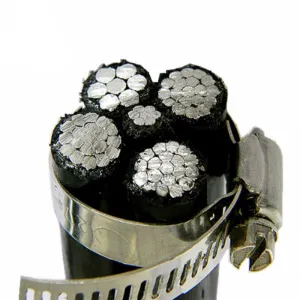
11kv 70mm2 Al/Sc/XLPE/Sc/Cut/PVC 3+1 Aerial Bundeled Conductor Cable
Category: Overhead insulated line wiresBrowse number: 292Number:Release time: 2025-08-06 06:25:3011kv 70mm² Al/Sc/XLPE/Sc/Cut/PVC 3+1 Aerial Bundled Conductor Cable Abstract 1. Product Overview The 11kv 70mm² Al/Sc/XLPE/Sc/Cut/PVC 3+1 Aerial Bundled Conductor Cable is a high-performance overhead power cable designed for medium-voltage distribution networks. The "3+1" configuration indicates three 70mm² phase conductors and one neutral conductor, while the material code "Al/Sc/XLPE/Sc/Cut/PVC" details its layered structure: aluminum conductors, semiconducting layers, cross-linked polyethylene (XLPE) insulation, copper tape shielding, and a PVC outer sheath. This cable integrates multiple functional layers to ensure safe, efficient power transmission in overhead applications across urban, rural, and industrial areas. 2. Structural Composition 2.1 Conductors and Core Layers The three phase conductors and one neutral conductor are made of high-purity aluminum (1350 series) with 61% IACS conductivity, stranded for flexibility. Each conductor is wrapped in an inner semiconducting (Sc) layer to ensure uniform electric field distribution. The main insulation consists of 1.4-1.8mm thick XLPE, providing excellent dielectric strength and thermal resistance, critical for 11kV operation. 2.2 Shielding and Sheath An outer semiconducting layer covers the XLPE insulation, followed by a copper tape (Cut) shield to contain electromagnetic interference. The entire bundle is encased in a 1.2-1.5mm thick PVC sheath, offering UV resistance, moisture protection, and mechanical durability. This layered structure balances electrical performance with environmental resilience. 3. Performance Characteristics 3.1 Electrical Performance Voltage and Current Handling: Rated for 11kV, with each 70mm² conductor carrying 220-250A continuously (30°C ambient), suitable for medium-voltage distribution loads. Dielectric Strength: XLPE insulation provides >25kV/mm strength, withstanding 30kV AC for 10 minutes in withstand tests. Shielding Effectiveness: Copper tape shield reduces electromagnetic interference by >90%, ensuring signal integrity in nearby communication lines. 3.2 Mechanical and Environmental Performance Tensile Strength: Stranded aluminum conductors and PVC sheath enable spans up to 80 meters, with a breaking load of 8-10kN. Temperature Resistance: Operates reliably at -40°C to +90°C, with XLPE retaining properties under short-term overloads up to 130°C. Weather Resistance: UV-stabilized PVC sheath resists sunlight degradation, while moisture barriers prevent water ingress, ensuring 30+ years of service life. 4. Application Scenarios Urban Distribution: Connecting substations to commercial and residential areas, where its compact design reduces visual impact. Rural Networks: Withstanding harsh weather in remote areas, minimizing maintenance needs over long spans. Industrial Zones: Powering factories and industrial parks, where shielding protects against electrical noise from machinery. Renewable Energy Links: Transmitting power from wind or solar farms to the grid, adapting to outdoor conditions. 5. Conclusion This 11kV aerial bundled cable combines advanced materials and engineering to deliver reliable medium-voltage power transmission. Its layered structure—from aluminum conductors to PVC sheath—ensures electrical efficiency, mechanical robustness, and environmental resistance, making it a versatile solution for modern distribution networks. -
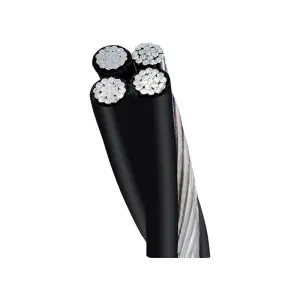
0.6/1kV Aerial Bundled Cable (ABC), Aluminum Conductor, XLPE Insulated, 3x25+1x16 mm²
Category: Overhead insulated line wiresBrowse number: 273Number:Release time: 2025-08-29 07:37:25As a core transmission carrier in low-voltage power distribution networks, the 0.6/1kV Aerial Bundled Cable (ABC) plays a crucial role in urban and rural power grid upgrades, industrial park power supply, and power coverage in remote areas. The 3x25+1x16 mm² specification product focused on here, with aluminum as the conductor and cross-linked polyethylene (XLPE) as the insulation material, has become a preferred solution balancing reliability and economy through its precise structural design and excellent performance, fully adapting to the practical needs of various low-voltage overhead power distribution scenarios. In terms of structure and specifications, this cable adopts a "3+1" core configuration, where 3 main core conductors have a cross-sectional area of 25mm² and 1 neutral core conductor has a cross-sectional area of 16mm². This differentiated design not only meets the current-carrying requirements for three-phase power supply but also optimizes material costs by reasonably controlling the specification of the neutral core. The conductor is made of high-purity aluminum with a purity of over 99.5%. While ensuring stable electrical conductivity, it significantly reduces material costs by approximately 40%-50% compared to copper conductors. Moreover, the low density of aluminum (2.7g/cm³) effectively reduces the cable's self-weight, lowering the load-bearing pressure on overhead line poles and towers, and indirectly reducing infrastructure investment in engineering construction. In addition, the aluminum conductor undergoes a special stranding process, using concentric stranding or bunch stranding methods, which not only improves the flexibility of the conductor (facilitating bending and wiring during construction) but also enhances its fatigue resistance, enabling it to better withstand mechanical stresses caused by wind and temperature changes in outdoor environments. The insulation layer uses cross-linked polyethylene (XLPE) material, which is one of the core supports for the cable's performance advantages. After modification through cross-linking technology, XLPE insulation material outperforms ordinary polyethylene (PE) in multiple aspects: Firstly, it has excellent electrical insulation performance, with a breakdown field strength of over 25kV/mm, allowing long-term stable operation at the 0.6/1kV voltage level, effectively isolating current leakage between cores and ensuring power supply safety. Secondly, its heat resistance is significantly improved, with a long-term allowable operating temperature of up to 90℃ and a short-term overload temperature of up to 130℃. Compared with PE-insulated cables with an operating temperature of 70℃, it can better cope with overload conditions during high summer temperatures or peak electricity consumption, reducing the risk of insulation aging due to overheating. Thirdly, it has stronger weather resistance and chemical corrosion resistance, capable of withstanding UV radiation, rain erosion, high-low temperature alternations (-40℃ to 90℃), and chemical gas erosion in industrial environments, preventing problems such as cracking and aging of the insulation layer and extending the cable's service life to more than 20 years. Meanwhile, XLPE material has high mechanical strength, outstanding tensile and wear resistance, reducing the risk of faults caused by external damage during construction and operation and maintenance. In terms of application scenarios, the cable has wide and precise adaptability. In urban and rural power grid transformation projects, its "bundled" design integrates phase wires and neutral wires into the same cable system, eliminating the need for additional independent brackets for phase and neutral wires, greatly simplifying the construction process and improving construction efficiency by approximately 30%. It is particularly suitable for environments with dense farmland and roads in rural areas, avoiding damage to crops or infrastructure caused by ground excavation. In low-voltage power distribution in industrial parks, the high-temperature resistance and chemical corrosion resistance of XLPE insulation can cope with high-temperature environments and potential chemical pollutants in industrial production, and the large current-carrying capacity of the 25mm² main core can meet the power supply needs of small and medium-sized mechanical equipment. In the power distribution networks of commercial complexes or residential areas, the stable performance of this cable ensures the continuity of residents' daily electricity use and the operation of commercial equipment, and its compact structural design reduces the impact of overhead lines on the urban landscape. Additionally, in temporary power supply scenarios (such as large-scale outdoor events and emergency disaster relief power supply), the lightweight nature of the aluminum conductor and the flexibility of the cable facilitate rapid transportation and erection, enabling the establishment of a reliable power supply line in a short period. From the perspective of balancing performance and cost, this cable demonstrates significant advantages. In addition to the direct cost advantage brought by the aluminum conductor, the long-term durability of XLPE insulation also reduces later operation and maintenance costs—its excellent anti-aging performance reduces the frequency of cable replacement, and the insulation layer is not easily damaged, lowering the number and cost of fault repairs. At the same time, this cable strictly complies with national standards such as GB/T 12527-2008 "Overhead Insulated Cables for Rated Voltage of 1kV and Below" and the international standard IEC 60502-1. It meets high industry standards in key indicators such as conductor DC resistance (DC resistance of 25mm² aluminum conductor ≤1.15Ω/km, DC resistance of 16mm² aluminum conductor ≤1.83Ω/km), insulation resistance (≥10¹²Ω·m), and voltage withstand strength, ensuring that power supply safety and operational stability are not sacrificed while controlling costs. In conclusion, the 0.6/1kV Aerial Bundled Cable (ABC) (Aluminum Conductor, XLPE Insulated, 3x25+1x16 mm²) has become an efficient solution in the field of low-voltage overhead power distribution with its scientific specification design, high-quality material selection, and comprehensive performance advantages. It can not only meet the cost control and reliability requirements of large-scale scenarios such as urban and rural power grid construction and industrial power supply but also adapt to the usage requirements of flexible scenarios such as temporary power supply, which is of great significance for promoting the efficient upgrading and wide coverage of low-voltage power distribution networks. -
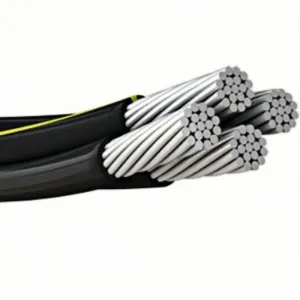
0.6/1kV 4 Core ABC Aerial Bundled Cable, Aluminum Conductor, 4x95 mm², XLPE Insulated
Category: Overhead insulated line wiresBrowse number: 370Number:Release time: 2025-08-29 07:48:02In medium and low-voltage power distribution networks, cables with a voltage rating of 0.6/1kV serve as key hubs connecting substations to high-load end-users. The 4-core Aerial Bundled Cable (ABC), characterized by its "multi-core integration and overhead installation" feature, has become a core solution for scenarios requiring high current capacity, such as industrial parks, large residential communities, and commercial complexes. The 4x95 mm² specification product focused on here, with high-purity aluminum as the conductor and cross-linked polyethylene (XLPE) as the insulation material, achieves the triple advantages of "high current-carrying capacity, strong environmental adaptability, and long service life" through scientific structural design and high-quality material selection, fully adapting to the practical needs of various medium and high-load low-voltage overhead power distribution scenarios. In terms of specifications and structure, this cable adopts a 4-core equal cross-sectional design, with each conductor having a cross-sectional area of 95 mm². This uniform configuration differs from the traditional "main core + small cross-sectional neutral core" model, making it more suitable for three-phase four-wire power distribution systems with large unbalanced currents or frequent load switching, such as power supply for industrial production lines and central air-conditioning systems in large commercial centers. The conductor is made of high-purity aluminum with a purity of ≥99.5%, manufactured through a concentric stranding process of multiple thin aluminum wires. During the stranding process, the lay length (usually 12-18 times the conductor outer diameter) is strictly controlled, which not only improves the flexibility of the conductor (facilitating bending and installation between poles and towers during construction) but also enhances the fatigue resistance of the conductor, enabling it to withstand mechanical stresses caused by wind and temperature changes during long-term overhead operation. Compared with copper conductors of the same cross-section, aluminum conductors reduce material costs by approximately 45%-55%, and their density is only about 1/3 of that of copper, significantly reducing the cable's self-weight (the weight of a 4-core 95 mm² aluminum conductor cable per kilometer is approximately 35% of that of a copper conductor cable of the same specification). This reduces the load-bearing pressure on poles and towers, indirectly lowering the investment cost of infrastructure such as poles and brackets in the project. The insulation layer uses cross-linked polyethylene (XLPE) material, which is the core support for the cable's performance advantages. XLPE forms a three-dimensional network molecular structure through a chemical cross-linking process, and its performance is far superior to that of ordinary polyethylene (PE): Firstly, it has excellent electrical insulation performance, with a breakdown field strength of over 28kV/mm, far higher than the insulation requirements of the 0.6/1kV voltage level, which can effectively isolate current leakage between the 4 cores and avoid short-circuit faults caused by insulation failure. Secondly, its heat resistance is significantly improved, with a long-term allowable operating temperature of up to 90℃ and a short-term overload temperature of up to 130℃ (duration ≤5 seconds). Compared with the long-term operating temperature of 70℃ for PE-insulated cables, it can better cope with short-term large current impacts during peak summer electricity consumption or equipment startup, reducing the rate of insulation aging. Thirdly, it has stronger weather resistance and chemical corrosion resistance, capable of withstanding extreme temperature changes from -40℃ to 90℃, UV radiation, acid-base gases in industrial environments, and salt spray erosion in coastal areas, avoiding problems such as cracking and embrittlement of the insulation layer and extending the cable's service life to more than 25 years (the service life of ordinary PE-insulated cables is about 15 years). At the same time, XLPE insulation has excellent mechanical strength, with a tensile strength of 18MPa and wear resistance 2-3 times that of PE, which can reduce the risk of faults caused by external damage during construction and operation and maintenance. In terms of application scenarios, the cable's adaptability accurately covers medium and high-load low-voltage power distribution needs: In large industrial parks, the current-carrying capacity of 4x95 mm² (each core can continuously carry a current of up to 260A at a working temperature of 90℃) can meet the power supply needs of multiple production lines, and the chemical resistance of XLPE insulation can resist oil pollution and dust contamination in the park. In large residential communities (such as residential districts with more than 1,000 households), its three-phase four-wire design can evenly distribute the residential electricity load, avoid voltage fluctuations caused by load imbalance, and ensure the normal operation of household appliances. Moreover, the overhead bundled structure does not require ground excavation for laying, reducing damage to community roads and greenery. In commercial complexes (such as shopping malls and office buildings), the lightweight nature of the cable facilitates capacity expansion and laying on poles around existing buildings, meeting the power supply needs of centralized electrical equipment such as air conditioners, elevators, and lighting. In the upgrading of power distribution networks in suburban areas, this cable can not only adapt to the complex climate conditions in suburban areas (such as high summer temperatures and low winter temperatures) but also support the growth of electricity consumption of newly added industrial and commercial users in suburban areas through its high current-carrying capacity, contributing to the upgrading of regional power infrastructure. From the perspective of balancing performance and cost, this cable demonstrates significant comprehensive advantages. In addition to the direct cost advantage brought by aluminum conductors, the long-term durability of XLPE insulation greatly reduces later operation and maintenance costs—its anti-aging performance reduces the frequency of cable replacement (the number of replacements during the life cycle is only 1/2 of that of ordinary PE-insulated cables), and the insulation layer is not easily damaged, reducing the annual operation and maintenance inspection cost by approximately 30%. At the same time, this cable strictly complies with the national standard GB/T 12527-2008 "Overhead Insulated Cables for Rated Voltage of 1kV and Below" and the international standard IEC 60502-1, and meets high industry standards in key performance indicators: the conductor DC resistance is ≤0.21Ω/km (at 20℃), the insulation resistance is ≥10¹²Ω·m, and after 1,000 hours of UV aging testing, the insulation tensile strength retention rate is ≥80%, ensuring that power supply safety and operational stability are not sacrificed while controlling costs. In conclusion, the 0.6/1kV 4-Core Aerial Bundled Cable (ABC) (Aluminum Conductor, 4x95 mm², XLPE Insulated) has become an efficient solution in the field of medium and high-load low-voltage overhead power distribution with its scientific specification design, high-quality material selection, and comprehensive performance advantages. It can not only meet the high current-carrying needs of industrial, commercial, large residential community and other scenarios but also reduce the full-life cycle cost through cost control and long-term durability, which is of great significance for promoting the development of low-voltage power distribution networks towards "high reliability, low cost, and long service life". -
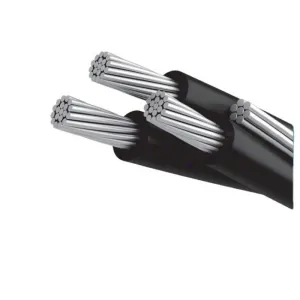
0.6/1kV Triplex ABC Aerial Bundled Cable, Aluminum Conductor, 3x16 mm², XLPE Insulated
Category: Overhead insulated line wiresBrowse number: 253Number:Release time: 2025-08-29 08:02:41In low-voltage power distribution networks, for medium-load scenarios such as small and medium-sized communities, rural power grids, and commercial street shops, the 0.6/1kV Triplex Aerial Bundled Cable (ABC) has become an ideal choice balancing power supply reliability and cost-effectiveness due to its compact "three-core integration and overhead installation" design. The 3x16 mm² specification product focused on here, with high-purity aluminum as the conductor and cross-linked polyethylene (XLPE) as the insulation material, achieves the core advantages of "medium current-carrying capacity, strong environmental adaptability, and convenient installation" through precise structural optimization and material upgrading. It can efficiently adapt to the practical needs of various medium-load low-voltage overhead power distribution scenarios, providing stable support for regional power transmission. In terms of specifications and structure, this cable adopts a three-core equal cross-sectional design, with each conductor having a cross-sectional area of 16 mm². It is suitable for three-phase three-wire power distribution systems, especially for scenarios requiring high three-phase current balance, such as mixed power supply for power and lighting in small processing plants and multi-story residential communities. The conductor is made of high-purity aluminum with a purity of ≥99.5%, manufactured through a concentric stranding process of multiple thin aluminum wires. The stranding lay length is strictly controlled between 12-16 times the conductor outer diameter, which not only improves the flexibility of the conductor (facilitating bending and installation between poles in complex terrains such as rural areas with many trees and narrow spaces along urban streets) but also enhances the fatigue resistance of the conductor, enabling it to withstand mechanical stresses caused by wind vibration and temperature alternations (-40℃ to 90℃) during long-term overhead operation. Compared with copper conductors of the same cross-section, aluminum conductors reduce material costs by approximately 40%-50%, and their density is only 27% of that of copper. The weight of a 3-core 16 mm² aluminum conductor cable per kilometer is about 30% of that of a copper conductor cable of the same specification, significantly reducing the load-bearing pressure on poles and towers, and reducing the investment in infrastructure such as poles and brackets in the project. It is particularly suitable for rural power grid transformation and community power distribution upgrading projects with limited budgets. The insulation layer uses cross-linked polyethylene (XLPE) material, which is a key support for the cable's performance advantages. XLPE forms a three-dimensional network molecular structure through chemical cross-linking, and its performance is far superior to that of ordinary polyethylene (PE): Firstly, it has excellent electrical insulation performance, with a breakdown field strength of over 26kV/mm, far higher than the insulation requirements of the 0.6/1kV voltage level. It can effectively isolate current leakage between the three cores, avoid short-circuit faults caused by insulation failure, and ensure the stable operation of the power distribution network. Secondly, its heat resistance is significantly improved, with a long-term allowable operating temperature of up to 90℃ and a short-term overload temperature of up to 130℃ (duration ≤5 seconds). Compared with the long-term operating temperature of 70℃ for PE-insulated cables, it can better cope with short-term large current impacts during peak summer electricity consumption (such as centralized air conditioning operation) or equipment startup, delay the insulation aging rate, and extend the cable's service life. Thirdly, it has stronger weather resistance and chemical corrosion resistance, capable of withstanding UV radiation, rain erosion, mild oil pollution in industrial areas, and pesticide residue erosion in rural areas, avoiding problems such as cracking and embrittlement of the insulation layer and extending the cable's service life to more than 20 years (the service life of ordinary PE-insulated cables is about 15 years). At the same time, XLPE insulation has outstanding mechanical strength, with a tensile strength of 16MPa and wear resistance more than twice that of PE, which can reduce external damage during construction dragging and erection and lower later operation and maintenance costs. In terms of application scenarios, the cable's adaptability accurately covers medium-load low-voltage power distribution needs: In rural power grid transformation, the current-carrying capacity of 3x16 mm² (each core can continuously carry a current of up to 85A at a working temperature of 90℃) can meet the daily electricity needs of multiple rural households. Its lightweight feature facilitates upgrading and laying on existing low poles and towers without replacing the poles, significantly reducing transformation costs. In multi-story residential communities (6-11 floors), its three-phase three-wire design can evenly distribute building power (elevators, water pumps) and household lighting electricity, avoid voltage fluctuations caused by load imbalance, and ensure the normal operation of household appliances. Moreover, the overhead bundled structure does not require excavating community roads, reducing interference with residents' lives. In commercial street shop areas, the cable's oil-resistant feature can adapt to the oil fume and oil pollution environment of catering shops, and its compact three-core structure can reduce the space occupied by overhead lines, keeping the street landscape neat. In small industrial plants (such as food processing plants and hardware workshops), the heat resistance and mild chemical corrosion resistance of XLPE insulation can cope with the equipment operating temperature and slight dust pollution in the plant area, providing stable power support for production equipment. From the perspective of balancing performance and cost, this cable demonstrates significant comprehensive advantages. In addition to the direct material cost advantage brought by aluminum conductors, the long-term durability of XLPE insulation further reduces the full-life cycle cost—its anti-aging performance reduces the frequency of cable replacement (the number of replacements during the life cycle is only 2/3 of that of ordinary PE-insulated cables), and the insulation layer has a low failure rate, reducing the annual operation and maintenance inspection cost by approximately 25%. At the same time, this cable strictly complies with the national standard GB/T 12527-2008 "Overhead Insulated Cables for Rated Voltage of 1kV and Below" and the international standard IEC 60502-1, and meets high industry standards in key performance indicators: the conductor DC resistance is ≤1.83Ω/km (at 20℃), the insulation resistance is ≥10¹²Ω·m, and after 1,000 hours of UV aging testing, the insulation tensile strength retention rate is ≥80%, ensuring that power supply safety and operational stability are not sacrificed while controlling costs. In conclusion, the 0.6/1kV Triplex ABC Aerial Bundled Cable (Aluminum Conductor, 3x16 mm², XLPE Insulated) has become an efficient solution in the field of medium-load low-voltage overhead power distribution with its scientific specification design, high-quality material selection, and comprehensive performance advantages. It can not only meet the power supply needs of rural power grids, residential communities, commercial streets, small industries and other scenarios but also reduce project investment and operation and maintenance costs through cost control and long-term durability, which is of great significance for promoting the balanced development and efficient upgrading of low-voltage power distribution networks.
News
Category:
No search results found!
Case
Category:
No search results found!
Video
Category:

Download
Category:
No search results found!
Job
Category:
No search results found!
Featured Products
No search results found!



 Phone
Phone E-mail