
 Español
 Portugues
 Pусский
 Français
 العربية
 ไทย
ไทย Türk dili
 Indonesia
 Tiếng Việt


4 Core ABC Cable
Find {keyword} Wholesale & quotes from China. We are Professional Manufacturer of {keyword} company, Factory & Exporters specialize in {keyword} with High-Quality.
Products
Category:
-
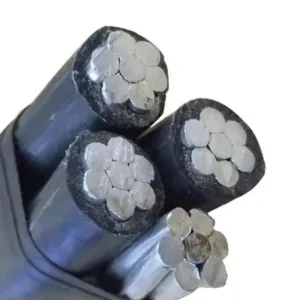
0.6/1kv ABC Cable - 4 Core (3pH + N) Al/PVC
Category: Overhead insulated line wiresBrowse number: 296Number:Release time: 2025-09-03 03:49:04The 0.6/1kV ABC Cable - 4 Core (3pH + N) Al/PVC is a versatile and cost-effective aerial bundled cable (ABC) engineered for low-to-medium voltage power distribution, tailored to meet the demands of residential, commercial, and light industrial electrical networks. Its design integrates functionality, durability, and ease of installation, making it a preferred choice for utilities, electrical contractors, and infrastructure projects where reliable three-phase power delivery—paired with a dedicated neutral conductor—is essential. By breaking down its key components, performance attributes, and application scope, this summary highlights why the cable stands out in overhead power distribution systems. At the core of the cable’s identity is its 4-core configuration (3pH + N), a design optimized for three-phase power systems—the backbone of modern electrical grids. The “3pH” refers to three insulated phase conductors, which work together to transmit alternating current (AC) efficiently, minimizing power loss and ensuring balanced load distribution across residential neighborhoods, small commercial complexes, or light industrial facilities. Three-phase systems are favored over single-phase setups for their ability to power larger loads (such as air conditioning units, industrial motors, or commercial lighting) without voltage fluctuations, making them indispensable for areas with mixed residential and commercial usage. Complementing the three phase conductors is the “N” (neutral conductor), a critical component that provides a return path for current, stabilizes phase voltages, and enhances safety by grounding excess current. Unlike 3-core ABC cables that rely on external grounding, the integrated neutral conductor eliminates the need for separate grounding wires, simplifying installation and reducing the risk of electrical faults. The “Al” in the cable’s designation denotes aluminum as the conductor material—a choice driven by performance, cost, and practicality for overhead applications. Aluminum offers a compelling strength-to-weight ratio: it is approximately 30% lighter than copper (the other common conductor material) while maintaining sufficient electrical conductivity (about 61% of copper’s conductivity). For overhead cables, this lighter weight translates to reduced mechanical stress on utility poles and support structures, extending the lifespan of both the cable and the infrastructure it relies on. Additionally, aluminum is significantly more cost-effective than copper, making the cable an economical option for large-scale distribution projects—such as new residential developments or rural electrification initiatives—without compromising on performance. Modern aluminum conductors in this cable are treated with an anti-corrosion coating (typically zinc or aluminum oxide), addressing historical concerns about oxidation and ensuring long-term reliability in outdoor environments, from humid coastal areas to dry inland regions. The “PVC” insulation further defines the cable’s performance and suitability for specific applications. Polyvinyl chloride (PVC) is a widely used insulation material for low-to-medium voltage cables, valued for its balance of affordability, flexibility, and basic environmental resistance. PVC insulation has a continuous operating temperature range of -15°C to 70°C, making it ideal for temperate climates where extreme heat or cold is rare—such as most urban and suburban areas. It provides effective electrical insulation, with a dielectric strength of approximately 15 kV/mm, preventing electrical breakdown and minimizing the risk of short circuits. PVC also exhibits good resistance to water, oils, and common environmental pollutants, ensuring the insulation remains intact even when exposed to rain, dust, or minor chemical splashes. While PVC is not as heat-resistant as cross-linked polyethylene (XLPE) (used in higher-temperature cables), its flexibility simplifies installation: the cable can be easily bent around utility poles or routed through tight spaces without cracking, reducing labor time and complexity. The “ABC” (aerial bundled cable) design is another defining feature, setting this product apart from traditional overhead cables. Aerial bundled cables consolidate multiple conductors into a single, pre-assembled unit, as opposed to loose conductors hung separately from utility poles. This design offers several advantages: first, it reduces clutter on utility poles, improving aesthetics—a key consideration in residential areas or urban landscapes. Second, the bundled structure protects conductors from physical damage (such as from tree branches or wildlife) and reduces the risk of phase-to-phase short circuits, which are common with loose conductors. Third, ABC cables are faster to install: instead of stringing individual conductors and grounding wires, installers can deploy the entire bundled unit in one pass, cutting installation time by up to 50% compared to traditional setups. For emergency power restoration—such as after a storm or accident—this speed is invaluable, minimizing downtime for end-users. The 0.6/1kV voltage rating aligns the cable with low-to-medium voltage distribution needs. The 0.6kV value represents the maximum phase-to-neutral voltage (the voltage between any phase conductor and the neutral), while 1kV is the maximum phase-to-phase voltage (the voltage between any two phase conductors). This rating positions the cable between low-voltage cables (below 0.6kV, used for localized loads like individual homes) and medium-voltage cables (above 1kV, used for long-distance transmission). It is perfectly suited for distributing power from medium-voltage transformers (which step down high-voltage grid power to 1kV) to low-voltage distribution boards in residential or commercial buildings, filling a critical gap in the electrical supply chain. In terms of applications, the 0.6/1kV ABC Cable - 4 Core (3pH + N) Al/PVC is highly versatile. In urban and suburban areas, it is used to supply power to apartment complexes, shopping plazas, and mixed-use developments, where its compact bundled design and integrated neutral conductor reduce installation complexity. For example, in a new residential neighborhood with 200 homes, the cable can efficiently distribute power to each household while supporting shared amenities like community centers or street lighting. In rural areas, it is ideal for electrification projects that connect remote villages to the grid, as its lightweight aluminum conductors and PVC insulation can withstand moderate weather conditions (such as rain or wind) without frequent maintenance. The cable also finds use in temporary power setups, such as construction sites or outdoor events, where its easy installation and reliable performance ensure a steady power supply for tools, equipment, or temporary lighting. Compliance with industry standards further reinforces the cable’s reliability. Most manufacturers design this cable to meet international standards such as IEC 60502 (for power cables with extruded insulation) or national standards like ANSI/ICEA S-94-649 (for aerial bundled cables in North America) and BS EN 50525 (for European markets). These standards mandate rigorous testing, including voltage withstand tests (to verify insulation integrity), thermal cycling tests (to ensure performance under temperature changes), and mechanical strength tests (to confirm resistance to pulling or bending). Compliance not only guarantees safety but also ensures compatibility with existing electrical infrastructure, simplifying approvals from local regulatory bodies. Maintenance is another area where the cable excels. The combination of corrosion-resistant aluminum conductors and PVC insulation minimizes the need for frequent upkeep. PVC insulation does not require periodic re-treatment (unlike older materials like rubber), and the anti-corrosion coating on aluminum conductors reduces the risk of conductor failure. Routine inspections—typically annual—focus on checking for physical damage to the insulation (such as cuts or abrasions) and ensuring the cable’s tension remains within recommended limits. These inspections are straightforward and can be completed quickly, reducing maintenance costs and downtime. In conclusion, the 0.6/1kV ABC Cable - 4 Core (3pH + N) Al/PVC is a practical, reliable, and cost-effective solution for low-to-medium voltage aerial power distribution. Its 4-core (3pH + N) design, aluminum conductors, PVC insulation, and aerial bundled structure work in tandem to deliver efficient power transmission, easy installation, and long-term durability. Whether powering residential neighborhoods, commercial complexes, or rural communities, the cable meets the diverse needs of modern electrical infrastructure while adhering to global safety and performance standards. As demand for accessible, reliable electricity continues to grow—particularly in expanding urban areas and underserved rural regions—this cable remains a vital component in building resilient, efficient power distribution networks.
News
Category:
No search results found!
Case
Category:
No search results found!
Video
Category:
No search results found!
Download
Category:
No search results found!
Job
Category:
No search results found!
Featured Products
No search results found!



 Phone
Phone E-mail