Detailed Introduction to PVC Cabtyre Cable (Vct Cable) Class 5 Flexible Copper Conductor Wire
I. From the Perspective of the Product Itself
(1) Specification Parameters
The specification parameters of PVC Cabtyre Cable (Vct Cable) with Class 5 24f1e1384b3a93dc71c3887b126f2c5
4 Conductors are rich and precise, providing solid technical support for its stable application in various scenarios.
In terms of conductor specifications, the cable adopts Class 5 flexible
Copper Conductors, which are stranded from multiple extremely fine
Copper Wires. The diameter of a single copper wire is usually less than 0.2mm, and the specific number of strands depends on the cross-sectional area of the cable. For example, a 0.5mm² cable may consist of dozens of fine copper wires stranded together, while a 1.5mm² cable has more strands to meet the cross-sectional area requirement. This design of stranded multiple fine copper wires is one of the key factors for its high
Flexibility.
The cable has a wide range of cross-sectional areas, commonly including 0.5mm², 0.75mm², 1mm², 1.5mm², 2.5mm², etc., which can meet the power transmission needs of different power equipment. Cables with different cross-sectional areas have different current-carrying capacities. Generally speaking, the larger the cross-sectional area, the higher the current-carrying capacity. Taking a 0.5mm² cable as an example, its current-carrying capacity is about 6A-10A, which is suitable for small electric tools and low-power equipment; the current-carrying capacity of a 1.5mm² cable can reach 14A-20A, which can be used for equipment with slightly higher power, such as hand-held angle grinders and electric drills.
The rated voltage is one of the important parameters of the cable. The common rated voltage is 300/500V, which makes it applicable to most low-voltage electrical equipment and scenarios, such as industrial equipment, medical equipment, and stage lighting. During the design and production process, the thickness of the insulation layer will be determined according to the rated voltage to ensure that the cable has sufficient insulation performance and prevent electric leakage and electric shock accidents.
The outer diameter of the cable also varies with the cross-sectional area. The outer diameter of a 0.5mm² cable is relatively small, about 3mm-5mm; the outer diameter of a 1.5mm² cable is slightly larger, about 5mm-8mm. The small outer diameter makes the cable more flexible during installation and use, especially in scenarios with limited space, which can be conveniently routed and arranged.
The minimum bending radius is an important parameter reflecting its high flexibility. The minimum bending radius of the cable can be as low as 4 times the outer diameter of the cable, which is much better than ordinary cables (usually 6-8 times). For example, a cable with an outer diameter of 5mm has a minimum bending radius of only 20mm, which can achieve flexible bending and folding in a narrow space, adapting to the use requirements of frequent movement and angle adjustment.
In addition, the temperature resistance parameters of the cable are also very critical. Its long-term operating temperature range is -15℃ to 70℃, and within this temperature range, the cable can maintain stable performance. The short-term temperature resistance can reach 105℃, which can cope with instantaneous high-temperature environments, such as heat generated by short-term overload of equipment. At the same time, the DC resistance of the conductor is strictly controlled within the standard range. At 20℃, the conductor resistance of 0.5mm² is ≤36.0Ω/km, and that of 1.5mm² is ≤12.1Ω/km, ensuring low loss during power transmission. The insulation resistance is ≥100MΩ·km under normal conditions, and can still maintain ≥10MΩ·km in a humid environment (relative humidity 95%, 40℃), effectively preventing the risk of electric leakage. It has excellent voltage withstand performance, able to withstand 2000V power frequency voltage for 1 minute without breakdown, meeting the requirements of international standards such as GB/T 5023 or IEC 60227.
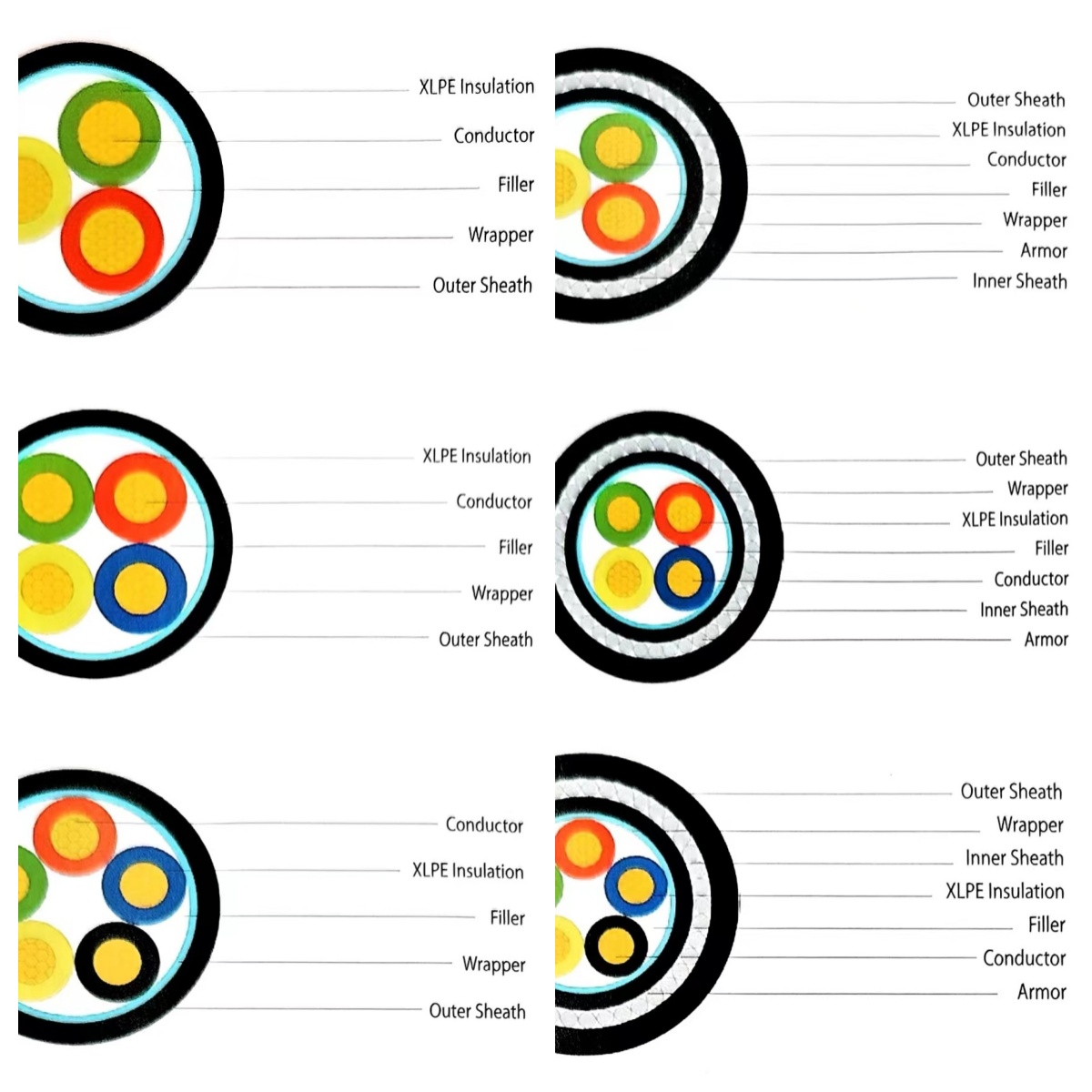
(2) Characteristic Applications
PVC Cabtyre Cable (Vct Cable) with Class 5
Flexible Copper Conductors, relying on its prominent features such as high flexibility and durability, has distinctive applications in many fields.
In the industrial field, this cable is an ideal power cord for hand-held electric tools. Hand-held electric tools such as angle grinders, electric drills, and sanders need to be frequently moved and operated during use, and dragging and bending of the cables are inevitable. Due to the excellent bending performance and fatigue resistance of this cable, it can reduce the cable dragging resistance during operation, making it easier and more convenient for operators to use the tools, and at the same time, it reduces the probability of cable damage due to frequent bending, prolonging the service life of the tools. For example, in a factory workshop, when workers use angle grinders for metal cutting and grinding, the Vct Cable connected to the angle grinder can flexibly bend with the workers' operations without jamming or breaking, ensuring the continuity and safety of the work.
The field of stage lighting equipment is also an important application scenario for this cable. Stage lighting needs to be frequently adjusted in angle and position according to the needs of the performance to create different lighting effects. Vct Cable is used to connect mobile lamps, and its high flexibility and fatigue resistance can adapt to such frequent operations without causing fatigue damage to the cable due to repeated bending. In occasions such as large concerts and drama performances, there are a large number of lighting equipment on the stage that need to constantly change positions and angles. The use of this cable ensures the stable and reliable power supply of the lighting equipment, providing a guarantee for the smooth progress of the performance.
The medical equipment field has extremely high requirements for the safety and flexibility of cables, and PVC Cabtyre Cable (Vct Cable) with Class 5 flexible copper conductors is also widely used in this field. Portable monitors, surgical lights, ventilators and other medical equipment need to be frequently moved and adjusted in position to meet the treatment needs of patients. The soft nature of the cable can avoid the risk of bumping into patients, and at the same time, its good insulation performance and chemical corrosion resistance can adapt to disinfection and cleaning work in the medical environment, ensuring the safe operation of the equipment. For example, in a hospital ward, a portable monitor is connected to the power supply through a Vct Cable, and medical staff can easily move the monitor to monitor the patient's vital signs at any time without worrying about the cable causing harm to the patient.
In the warehousing and logistics industry, the connecting cables of automated sorting equipment often choose this cable. During the high-speed operation of automated sorting equipment, the cables will swing and bend with the movement of the equipment. Vct Cable can adapt to the cable swing during such high-speed operation, and its high flexibility and fatigue resistance ensure that the cable is not easily damaged, thus ensuring the stable operation of the automated sorting equipment and improving the sorting efficiency of warehousing and logistics. In large logistics warehouses, thousands of packages are sorted and transported by automated sorting equipment, and the reliable performance of this cable provides strong power support for this process.
In addition, this cable is also commonly used in temporary power supply scenarios such as emergency power supplies and mobile power generation equipment. In case of sudden power outages or outdoor operations, emergency power supplies and mobile power generation equipment need to be quickly connected to electrical equipment to ensure power supply. The quick-plug connector design of Vct Cable (with waterproof connectors) can improve work efficiency and save connection time. For example, in an outdoor rescue scene, rescuers can quickly connect mobile power generation equipment with lighting equipment, communication equipment, etc. through this cable, providing timely power support for rescue work.
(3) Material and Style
In terms of material selection and style design, PVC Cabtyre Cable (Vct Cable) with Class 5 flexible copper conductors fully considers the needs of its use scenarios, showing excellent performance and practicality.
The
Conductor Material is high-purity oxygen-free copper with a purity of more than 99.95%. High-purity copper has excellent conductivity, which can reduce energy loss during power transmission and improve transmission efficiency. At the same time, oxygen-free copper has good flexibility, which is easy to be processed into extremely fine copper wires, and is not easy to break during stranding, ensuring the quality and performance of the conductor. The Class 5 flexible copper conductor formed by stranding multiple fine copper wires further enhances the flexibility and fatigue resistance of the cable, enabling it to adapt to frequent bending and movement.
The insulation layer is made of PVC material with a temperature resistance level of 105℃. This PVC material has undergone special formula treatment, with good insulation performance, chemical corrosion resistance and aging resistance. In high-temperature environments, it can maintain stable insulation performance without softening, flowing and other phenomena; when in contact with acids, alkalis, oils and other chemicals, it is not easy to be corroded and damaged. The thickness of the insulation layer is designed according to the rated voltage and cross-sectional area of the cable to ensure that it can effectively isolate the conductor from the external environment and prevent electric leakage accidents.
The outermost sheath is also made of special PVC material with a toughened formula, which gives it high mechanical strength and tear resistance, with a tear strength of more than 12kN/m. This sheath can resist mechanical collision, wear and ultraviolet aging, protect the internal conductor and insulation layer of the cable from damage, and prolong the service life of the cable. At the same time, the sheath also has certain flame retardant performance, with a flame retardant grade of UL94 V-0. It can self-extinguish quickly in case of fire, reducing the risk of fire spread and improving the safety of the cable.
In terms of style, the appearance of the cable is usually dark colors such as black or gray. This color is not only dirt-resistant, but also can reduce light reflection, making it more suitable for some light-sensitive scenarios. The surface of the cable is smooth and flat, which is easy to clean and maintain. In addition, according to different use requirements, the cable can also be equipped with different types of connectors, such as plugs, sockets, terminals, etc., to facilitate connection with electrical equipment. The material of the connector is usually high-quality plastic or metal, which has good conductivity and corrosion resistance, ensuring the reliability and safety of the connection.
(4) Production Process
The production process of PVC Cabtyre Cable (Vct Cable) with Class 5 flexible copper conductors is complex and rigorous, and each link is strictly controlled to ensure that the quality and performance of the product meet relevant standards and requirements.
The production of the conductor is the beginning of the entire process. First, high-purity oxygen-free copper ingots are selected as raw materials and put into a melting furnace for melting to remove impurities and gases, obtaining pure copper liquid. Then, the copper liquid is made into copper rods through continuous casting and rolling processes, and the diameter of the copper rods is controlled according to the requirements of subsequent wire drawing. Next, the copper rods enter the wire drawing machine for wire drawing treatment, and through a series of dies of different specifications, the copper rods are drawn into extremely fine copper wires with a diameter of less than 0.2mm. During the wire drawing process, it is necessary to strictly control the wire drawing speed, temperature and lubrication conditions to ensure that the copper wires have uniform diameter, smooth surface, and good mechanical properties and conductivity. After wire drawing, multiple fine copper wires are stranded according to a certain stranding method to form Class 5 flexible copper conductors. During the stranding process, it is necessary to ensure that the tension of each strand of copper wire is uniform and the stranding pitch is consistent to ensure the roundness and flexibility of the conductor.
The extrusion of the insulation layer is one of the key links in the production process. The PVC
Insulation Material treated with a special formula is added to the extruder and heated to melt into a fluid state. Then, the molten PVC material is uniformly coated on the surface of the copper conductor through an extrusion die to form an insulation layer. During the extrusion process, it is necessary to accurately control the extrusion temperature, pressure and speed to ensure that the insulation layer has uniform thickness, smooth surface, and is closely combined with the conductor without bubbles, impurities and other defects. The thickness of the insulation layer is accurately controlled according to the rated voltage and cross-sectional area of the cable to meet the requirements of relevant standards. After extrusion, the insulation layer needs to be cooled and shaped in a cooling water tank to maintain a stable shape and performance.
The extrusion process of the sheath is similar to that of the insulation layer, but the formula of the PVC material used is different. The sheath material adopts a toughened formula to improve its mechanical strength and tear resistance. The sheath material is added to another extruder, heated and melted, and then coated on the outside of the conductor that has been coated with the insulation layer through an extrusion die to form the outer sheath of the cable. During the extrusion process, various parameters also need to be strictly controlled to ensure that the sheath has uniform thickness, flat surface, and is closely combined with the insulation layer. After the sheath extrusion is completed, the cable enters the cooling system for cooling to make it quickly shaped.
The cooled cable also needs to undergo a series of subsequent processing procedures. First, the cable is pulled to the take-up machine by a tractor, and the take-up machine winds the cable neatly on the cable reel. During the take-up process, it is necessary to control the traction speed and take-up tension to avoid stretching and twisting of the cable. Then, the cable is printed, and information such as product model, specification, rated voltage, and manufacturer is printed on the surface of the cable for user identification and traceability. Special printing ink is used for printing to ensure that the handwriting is clear and durable.
Throughout the production process, quality inspection runs through. From the inspection of raw materials to the inspection of semi-finished products in each process, such as the diameter and resistance of conductors, the thickness, appearance and voltage withstand performance of insulation layers and sheaths, to the comprehensive performance testing of finished cables, such as bending performance, aging resistance, flame retardant performance, etc., all need to be strictly tested. Only products that pass the inspection can leave the factory for sale. Through strict production process control and quality inspection, it is ensured that the PVC Cabtyre Cable (Vct Cable) with Class 5 flexible copper conductors has excellent performance and reliable quality.
II. From the Perspective of General Product Information
(1) Packaging
The packaging design of PVC Cabtyre Cable (Vct Cable) with Class 5 flexible copper conductors fully considers the characteristics of the product and the needs of transportation and storage, aiming to protect the cable from damage during the entire circulation process and ensure the quality and performance of the product.
For coiled cables, solid paper reels or plastic reels are usually used for packaging. Paper reels are made of high-strength kraft paper or cardboard, with certain compressive strength and moisture resistance; plastic reels are made of high-quality polyethylene or polypropylene materials by injection molding, with better impact resistance and corrosion resistance. The size of the cable reel is designed according to the length and cross-sectional area of the cable to ensure that the cable can be neatly wound on it without distortion, folding or loosening.
When the cable is wound on the cable reel, it is necessary to control the winding tension to make the cable arrange closely, reduce the shaking and friction during transportation, and prevent the cable sheath from being worn. After winding, the outer layer of the cable is wrapped with a moisture-proof and dust-proof plastic film, which is closely attached to the surface of the cable, and can effectively block moisture, dust, impurities, etc. from entering the cable, protecting the insulation layer and sheath of the cable from damage.
For cables with short lengths, plastic packaging bags may be used for packaging. The packaging bags are made of thickened polyethylene materials, with good sealing and tear resistance. The cable is neatly put into the packaging bag, and then the bag mouth is sealed to prevent the cable from being polluted and damaged during transportation and storage. The packaging bag is printed with relevant product information, such as model, specification, length, manufacturer, etc., which is convenient for users to identify and purchase.
A detailed label is pasted on the outside of the package, which clearly indicates the product name, model specification, length, rated voltage, production batch number, production date, implementation standard, manufacturer name and contact information, etc. This information not only facilitates users to identify and accept the product, but also provides convenience for product traceability and quality tracking. For exported cables, the information on the label will also be translated into the corresponding foreign language to meet the requirements of the international market.
During storage, packaged cables should be stored in a dry, ventilated, dark warehouse away from heat sources and corrosive substances. The cable reel should be placed on a flat ground and padded with wooden blocks to keep a certain distance between the cable reel and the ground to prevent the cable reel from getting damp. For cables packaged in plastic bags, stacking too high should be avoided to prevent the cables at the bottom from being crushed. At the same time, it is necessary to regularly check the packaging of the cable, and if the packaging is found to be damaged or damp, it should be handled in a timely manner.
(2) Transportation
The transportation process of PVC Cabtyre Cable (Vct Cable) with Class 5 flexible copper conductors needs to strictly follow relevant regulations and operating procedures to ensure the safety and integrity of the cable and avoid product damage due to improper transportation.
Before transportation, a comprehensive inspection of the cable packaging is required. Carefully check whether the cable reel is firm, whether the baffle is intact, whether the cable is wound neatly and tightly, whether the plastic film is well sealed, whether the label is clear and complete, etc. For cables packaged in plastic bags, check whether the packaging bag is damaged and whether the seal is tight. If any damage or looseness is found in the packaging, it should be repaired or repackaged in a timely manner until it meets the transportation requirements.
According to the specifications, quantity and transportation distance of the cables, select appropriate transport vehicles. Ordinary trucks can be used for short-distance transportation, while box trucks or semi-trailers are more suitable for long-distance transportation to provide better protection. The carriage of the transport vehicle should be kept clean and flat, without sharp debris, to prevent scratching the cable packaging and sheath. When loading the cable, use a forklift or crane to lift the cable reel smoothly into the carriage. During the lifting process,


 Español
 Portugues
 Pусский
 Français
 العربية
 ไทย
ไทย Türk dili
 Indonesia
 Tiếng Việt



 Phone
Phone E-mail